
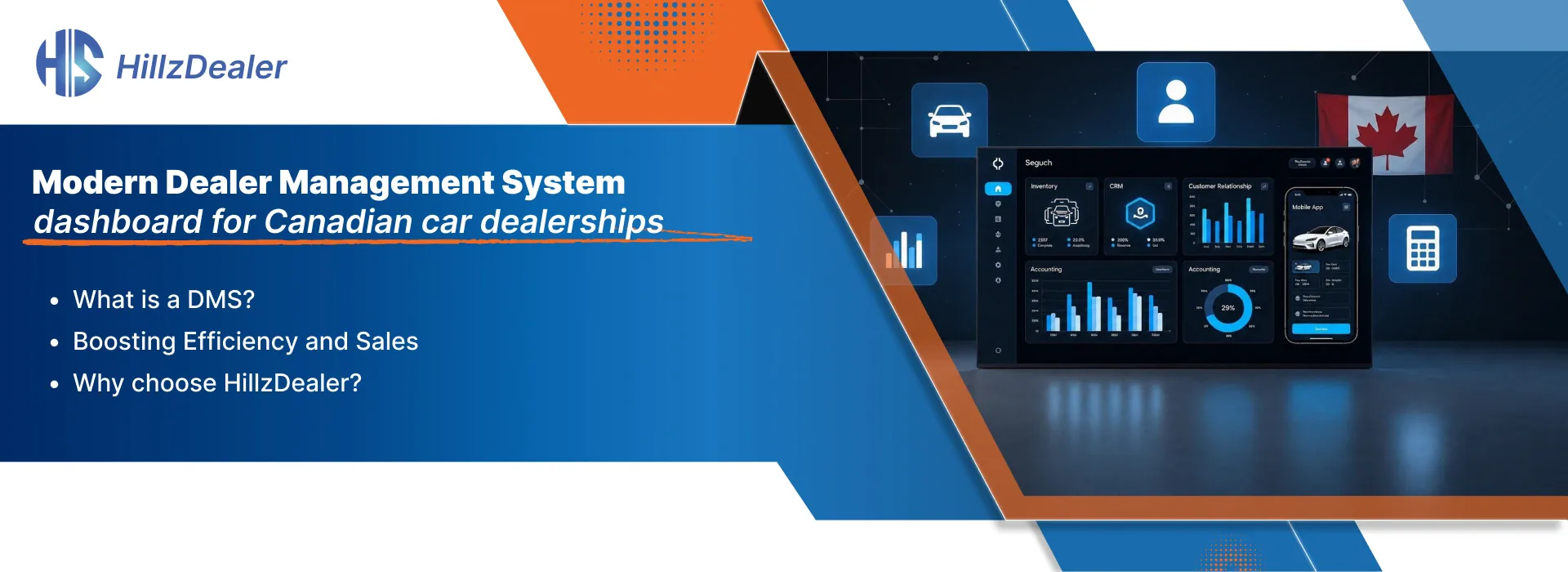
Automotive dealerships manage a continuous flow of customers, leads, vehicles, deals, documents, payments, employee activity, and financial records. When these areas are handled through separate systems, spreadsheets, inboxes, and paper files, dealership teams can spend unnecessary time searching for information or entering the same details more than once.
A modern automotive dealer management system brings important operational information into a more connected environment. The goal is not simply to replace paper with software. It is to help sales, finance, administration, accounting, service, and management teams work from clearer and more consistent information.
What Is an Automotive Dealer Management System?
An automotive dealer management system, commonly called a DMS, is a software platform designed to support dealership operations.
Depending on the selected products and configuration, a modern DMS may connect:
- Customers and leads
- Vehicle inventory
- Sales opportunities and deals
- Pricing and trade-in information
- Contracts and documents
- Electronic-signature workflows
- Payments and accounting records
- Employee roles and tasks
- Mobile access
- Reporting and management visibility
- Dealer websites and lead capture
- Vehicle reconditioning activity
- Supported integrations
The most important difference between a basic record-keeping system and a connected DMS is how information moves between dealership departments.
For example, customer information collected in an automotive CRM can remain connected to vehicle interests, sales activity, deal records, documents, and follow-up tasks.
Connect Customer and Lead Management
Customer information often enters a dealership through several sources, including the dealer website, phone calls, messages, campaigns, showroom visits, and referrals.
A connected CRM helps dealership employees organize:
- Customer contact information
- Lead sources
- Vehicle interests
- Communication history
- Appointments
- Follow-up tasks
- Sales opportunities
- Deal status
This gives salespeople and managers more context when responding to an inquiry or reviewing an active opportunity.
Connecting CRM and DMS information can also reduce the need to transfer customer details manually between separate systems.
Organize Vehicle Inventory
Vehicle inventory is connected to nearly every major dealership workflow.
Dealership teams need visibility into vehicle information such as:
- VIN and vehicle details
- Vehicle status
- Dealership location
- Pricing
- Acquisition and reconditioning costs
- Photos
- Website merchandising
- Customer activity
- Deal progress
A connected inventory management system helps employees work with vehicle information throughout the lifecycle of the unit, from acquisition and preparation to customer interest and sale.
For multi-location operations, location-level inventory visibility can also help authorized employees understand where vehicles are held and how they are moving through the business.
Keep Deals and Documents Connected
An active vehicle deal may involve customer information, vehicle details, pricing, trade-ins, calculations, manager review, documents, signatures, payments, and accounting records.
When these items are disconnected, employees may need to search across multiple systems to understand the current status of the transaction.
A modern automotive DMS can help keep the major components of a deal connected, including:
- Customer and vehicle information
- Deal status
- Pricing and trade-in details
- Desking activity
- Manager review
- Contracts and forms
- Electronic signatures
- Payment records
- Completed documents
This helps different departments work from the same transaction context.
Connect Accounting Information with Operations
Dealership accounting is closely related to vehicle costs, deals, customer payments, operating expenses, vendors, and financial reporting.
A connected dealership accounting system can help authorized employees organize financial information alongside relevant operational records.
This may include:
- Vehicle and acquisition costs
- Repair and reconditioning expenses
- Deal-related financial records
- Customer payment activity
- Vendor expenses
- Sales and profit reporting
- Location-level information
- Accounting integration options
Integration and accounting requirements should be reviewed during configuration because every dealership may use different systems and processes.
Support Mobile Dealership Work
Dealership activity does not take place only behind a desk.
Employees may need access while working on the lot, reviewing a vehicle, assisting a customer, attending an auction, or moving between dealership locations.
The HillzDealer Mobile App supports access to inventory, customer information, leads, and deal activity from compatible mobile devices. It also supports practical tools such as VIN scanning, driver’s licence scanning, and in-app communication.
Mobile access should be configured according to employee responsibilities and dealership requirements.
Use AI to Support Practical Dealership Workflows
The most useful AI dealership workflows focus on real operational use cases rather than vague promises.
AI-assisted workflows may help support:
- Customer and lead follow-up
- Repetitive administrative tasks
- Vehicle description and merchandising preparation
- Supported marketplace-posting activity
- Organization of dealership information
- Identification of activity that may require management attention
AI does not replace dealership employees, management judgment, or established operating procedures. Its value comes from supporting employees within connected customer, vehicle, deal, document, and operational workflows.
Support Different Dealership Structures
Dealership software should not be limited to one type or size of automotive business.
HillzDealer is positioned to support:
Independent Dealerships
Connect essential customer, inventory, deal, document, accounting, and website workflows.
Franchise Dealerships
Support more structured sales, finance, administration, customer, inventory, reporting, and employee processes.
Single-Location Operations
Give employees access to shared dealership information within one connected platform.
Multi-Location Groups
Organize users, inventory, customers, leads, deals, documents, accounting information, and reporting across locations.
Dealerships with more complex requirements should review franchise and multi-location dealership software based on their departments, locations, integrations, reporting, implementation, and support needs.
What to Review When Choosing a DMS
Before selecting dealership management software, review:
- Which departments will use the platform?
- Which existing systems need to remain?
- What information must move between products?
- How many users and locations require access?
- Which employee permissions are needed?
- What documents and workflows must be configured?
- What accounting or third-party connections are required?
- What onboarding, migration, and training support is needed?
- What reports are important to management?
- Which AI-assisted workflows are relevant to the operation?
A personalized requirements discussion is more useful than choosing software based only on a generic feature list.
A Connected Platform for Modern Dealerships
HillzDealer brings DMS, CRM, inventory, deals, accounting, digital documents, electronic signatures, websites, mobile access, reporting, service workflows, and AI-powered automation into one dealership platform.
Available products, configurations, integrations, onboarding, and support depend on each dealership’s operational requirements.
Topics