
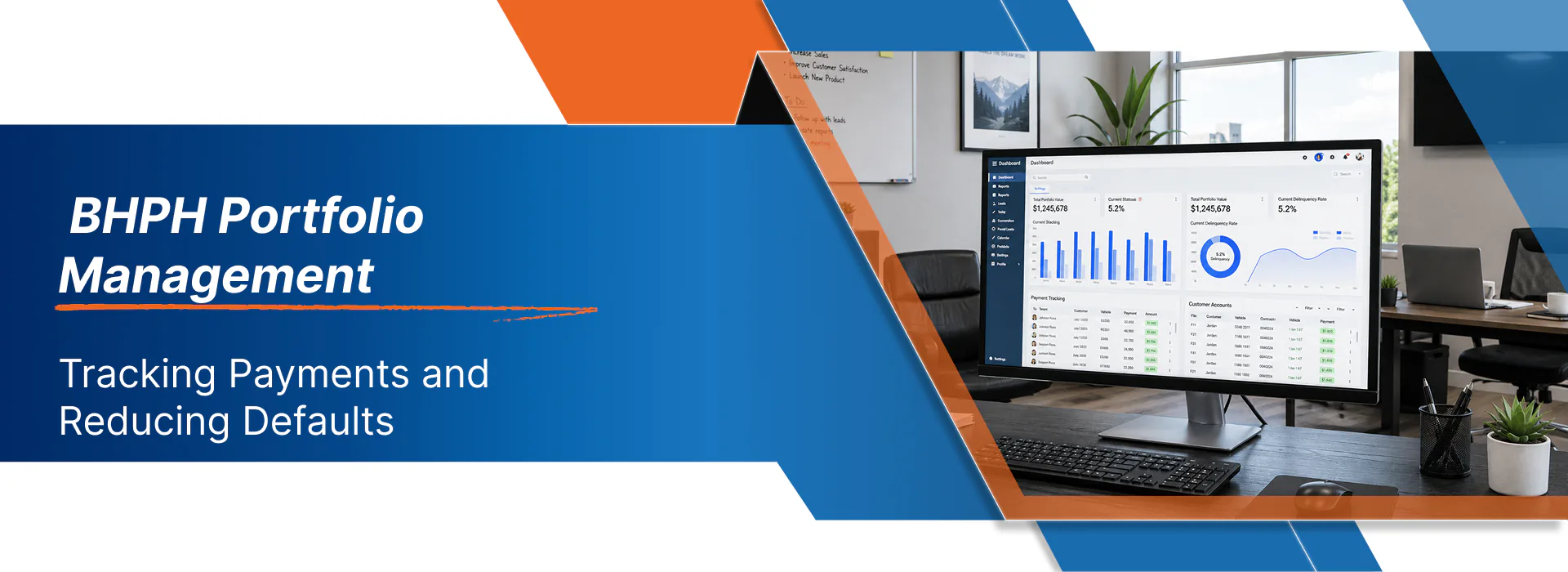
In-house financing does not end when a vehicle is delivered.
The dealership must continue managing customer accounts, scheduled payments, received amounts, communication, documents, financial information, and portfolio reporting.
Buy Here Pay Here Software provides a structured way to organize these ongoing responsibilities.
The objective is accurate, consistent account administration and clearer visibility into portfolio activity.
What Is a BHPH Portfolio?
A BHPH portfolio is the collection of customer accounts managed through the dealership’s in-house financing operation.
Each account may include:
- Customer information
- Vehicle information
- Deal details
- Contract records
- Payment schedule
- Received payments
- Outstanding or deferred amounts
- Communication history
- Account status
- Related accounting information
Portfolio management involves reviewing these accounts individually and collectively.
Centralize Customer Account Information
When account information is spread across spreadsheets, paper files, payment records, and employee inboxes, it can be difficult to understand the current status.
A centralized workflow should connect each account with the correct:
- Customer
- Vehicle
- Deal
- Documents
- Payment activity
- Communication
- Financial records
Authorized employees can then work from clearer account context.
Track Scheduled and Received Payments
A structured system should help dealership employees review:
- Payment due dates
- Scheduled payment amounts
- Received amounts
- Outstanding amounts
- Deferred amounts
- Payment history
- Account status
Employees should follow an approved process for recording, adjusting, and reviewing payment information.
Software can organize payment activity, but it cannot guarantee that customers will pay according to schedule.
Use Consistent Payment Communication
Payment reminders may help dealerships maintain consistent communication with customers.
The dealership should establish:
- When reminders are sent
- Which communication channels are used
- Who can send or approve messages
- How consent is managed
- How communication is recorded
- When an account requires employee review
Where available in the selected configuration, email and SMS reminder workflows can support consistent communication. Their use should follow the dealership’s policies and applicable communication requirements.
Review Portfolio Activity Regularly
Management should establish a regular portfolio-review schedule.
The review may include:
- Active customer accounts
- Upcoming scheduled payments
- Received amounts
- Outstanding or deferred amounts
- Account-status changes
- Communication activity
- Documentation status
- Financial reporting
- Location or employee responsibilities
The dealership should determine which measures are most useful for its operation.
Available metrics and calculations depend on the dealership’s selected products, configuration, and reporting requirements.
Connect Portfolio Information with Accounting
Payment and account records can affect the dealership’s accounting and financial reporting.
A connected workflow may help accounting and management employees review:
- Customer payment activity
- Deal-related records
- Vehicle information
- Received amounts
- Outstanding balances
- Relevant dealership expenses
- Reporting information
The exact dealership accounting connection should be evaluated according to the dealership’s current systems and requirements.
Supported accounting systems, provider requirements, implementation details, and data should be confirmed before configuring the connection.
Maintain Connected Documents
Customer accounts may require access to contracts, signed records, payment-related documents, and other relevant forms.
The dealership should maintain a clear process for:
- Preparing documents
- Connecting documents with the account
- Monitoring document status
- Retaining completed records
- Controlling employee access
- Reviewing document requirements
HillzDealer’s dealer management system supports deal-connected documents and electronic-signature workflows.
Software does not replace jurisdiction-specific legal or record-retention guidance.
Organize Employee Access and Responsibilities
BHPH portfolio information may include sensitive customer and financial records.
Access should be organized according to employee responsibilities.
Relevant roles may include:
- Sales
- Finance
- Administration
- Accounting
- Customer communication
- Management
- Ownership
Dealerships should determine which employees can view, enter, change, approve, or report on account information.
Support Multi-Location Visibility
A multi-location dealership group may need to distinguish between:
- Accounts associated with each location
- Location-level employees
- Customer and vehicle records
- Payment activity
- Management reporting
- Accounting information
A connected platform can help organize location-level information while giving appropriately authorized management employees broader visibility.
The implementation should reflect the group’s actual ownership, accounting, employee, and reporting structure.
Technology Does Not Eliminate Portfolio Risk
No BHPH platform can eliminate:
- Missed payments
- Customer hardship
- Documentation errors
- Legal requirements
- Financial risk
- Employee mistakes
- Poorly designed account policies
Technology can help organize records and support more consistent workflows. It cannot guarantee collections, eliminate missed payments, identify every high-risk account, or ensure legal, financial, or operational outcomes. The dealership remains responsible for its credit, legal, financial, communication, and operating decisions.
How HillzDealer Supports Portfolio Management
Depending on the selected configuration, HillzDealer can support:
- Portfolio-management workflows
- Customer financing information
- Payment and installment records
- Dashboard and reporting views
- Visibility into paid, received, and deferred amounts
- Email and SMS payment reminders
- Connected customer, vehicle, and deal information
- Relevant accounting workflows
- Mobile access to selected dealership information
Product availability and configuration should be reviewed according to the dealership’s accounts, users, locations, reporting, documents, integrations, onboarding, and support requirements.
Topics